
The 2:1 espresso rule (also written as the 1:2 brew ratio) describes the standard weight ratio of dry coffee grounds to brewed espresso: 1 gram of ground coffee produces 2 grams of liquid espresso. For example, an 18g dose of grounds yields a 36g finished shot.
It is widely considered the golden starting point for specialty espresso, delivering a balanced extraction of sweetness, acidity, and bitterness. It is not a rigid rule — baristas adjust it based on roast level, equipment, and personal taste.
Key Takeaways
- The 2:1 ratio means 1 part coffee grounds yields 2 parts espresso by weight (e.g. 18g dry grounds → 36g liquid espresso).
- It delivers a balanced extraction (18–22% yield, 8–12% TDS) as a reliable baseline for most beans.
- Always adjust grind size first before changing your brew ratio.
- Dark roasts work best with shorter ratios (~1:1.5); light roasts often need longer ratios (~1:2.5).
- Taste is the final judge — use numbers as a starting point, then dial in by flavor.
Why the 2:1 Ratio Is the Industry Standard
Balanced Extraction Chemistry
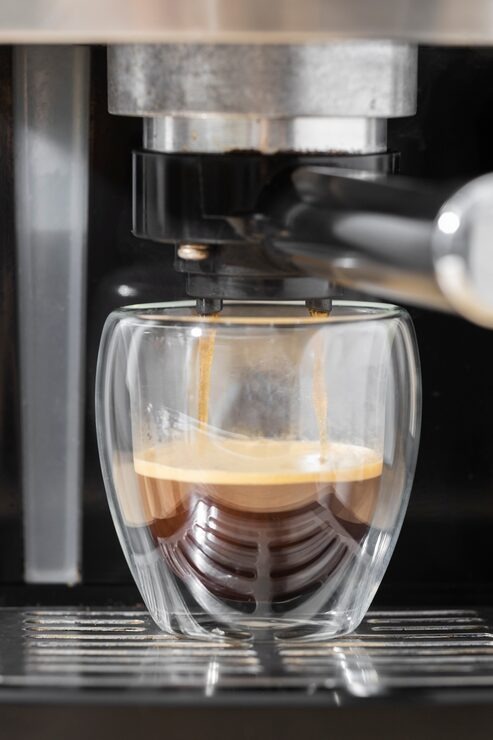
Espresso extraction unfolds in distinct stages as water passes through the coffee puck:
- Early phase (0–20 seconds): Acids and aromatic compounds dissolve first, bringing bright, fruity notes.
- Mid phase (20–30 seconds): Sugars and lipids extract, adding sweetness and building crema.
- Late phase (30+ seconds): Tannins and woody compounds emerge, bringing bitterness and dryness.
A 1:2 ratio typically finishes in 25–30 seconds, landing right in the optimal extraction window. It dissolves desirable flavor compounds without pulling out excessive bitter elements. This produces espresso with 8–12% total dissolved solids (TDS) and 18–22% extraction yield — the industry benchmark for balanced flavor.
Why Weight Beats Volume for Consistency
Older methods measured espresso by volume, but this approach is unreliable. Crema volume varies widely based on bean freshness — freshly roasted coffee produces far more crema than older beans, so the same 60ml mark can contain very different amounts of actual liquid coffee.
A weight-based 2:1 ratio eliminates this variability. It sets both dose and yield by mass, so results are repeatable even as crema volume changes. This consistency is why the 1:2 weight ratio became the specialty espresso default.
How to Apply the 2:1 Ratio at Home

Step-by-Step Brewing with a Scale
- Weigh out 18g of freshly ground coffee (fine espresso grind).
- Distribute grounds evenly in the portafilter and tamp firmly to create a level bed.
- Lock the portafilter fully into the machine group head.
- Tare a cup on a digital scale, then start extraction. Stop the shot at 36g of output.
- Aim for a total brew time of 25–30 seconds.
- Stir the shot thoroughly before tasting to blend all layers evenly.
Adjust Grind First, Then Ratio
Grind size controls flow rate more than any other variable, and it is always the first adjustment to make:
- If the shot finishes in under 20 seconds (too fast): Grind finer to slow flow.
- If the shot takes over 35 seconds (too slow): Grind coarser to speed flow.
- Keep your dose weight fixed while dialing in grind. Only adjust brew ratio once flow time lands in the 25–30 second window.
Common Mistakes with Espresso Ratios
1. Treating the Ratio as a Hard Rule
Numbers are a baseline, not a guarantee of good flavor. A shot can hit exactly 36g in 28 seconds and still taste sour or bitter. The scale tells you yield, not taste — always evaluate flavor and adjust accordingly.
2. Changing Ratio Before Fixing Grind
Many new brewers adjust ratio when shots run too fast or too slow, but this hides the real problem. Poor grind size causes uneven flow and channeling, which no ratio change will fix. Always correct grind first.
3. Ignoring Bean Freshness & Grind Uniformity
Stale beans lose CO₂ and oils, changing how water flows through the puck. Uneven grinding creates dense clumps and gaps, causing channeling: water follows the path of least resistance, leaving dry pockets of coffee behind. This produces uneven extraction with both sour and bitter notes, even at a perfect 1:2 ratio.
When to Deviate From the 2:1 Ratio
The 2:1 ratio is a starting point, not a universal standard. Adjust it based on your beans and how you plan to drink the espresso.
By Roast Level
- Dark roasts: More soluble and quick to extract. Use a shorter ratio (1:1.5 to 1:2) to avoid ashy, over-extracted flavors.
- Medium roasts: Perform best right around the 1:2 baseline.
- Light roasts: Less soluble, require longer extraction. Use 1:2 to 1:2.5 to fully develop sweetness and aromatic complexity.
By Drink Type
- Straight espresso: 1:2 baseline for balanced, full flavor.
- Milk drinks (lattes, cappuccinos): Use a shorter 1:1 to 1:1.5 ratio for a concentrated shot that stands up to milk.
FAQ
What does a 2:1 espresso ratio actually mean?
It describes the weight relationship between dry coffee and brewed espresso: 1 gram of ground coffee produces 2 grams of liquid. For a standard double shot, 18g of coffee yields 36g of espresso.
How does a 20g dose work with the same ratio?
A 20g dose follows the same 1:2 formula, yielding 40g of espresso. Adjust grind size to hit the 25–30 second target time. It works well for larger baskets or stronger drinks.
Is the 2:1 ratio a strict rule?
No. It is a reliable starting point, not a rigid standard. Most specialty espresso recipes fall between 1:1.5 and 1:2.5, adjusted for roast level, equipment, and personal taste.