Yes, a high-quality portable espresso maker can deliver café-quality espresso on almost any trip — but there are important tradeoffs to understand first. All models require either hand effort or power, take a small amount of practice to master, and take up limited packing space. For travelers tired of hotel lobby coffee or instant packets, a well-chosen travel espresso machine is a game-changer for camping, road trips, flights, and work travel.
Key Takeaways
- A portable device makes true espresso if it delivers a steady 9 bar of pressure and 92–96°C (197–205°F) water temperature.
- Manual models need no power and work off-grid, but require arm strength and a separate hot water source.
- Battery-powered self-heating models are one-button convenient, but add weight, cost, and charging requirements.
- Choose manual for backpacking/camping; choose battery-powered for hotels, road trips, and office use.
How Do Portable Espresso Makers Work?
Basic Mechanics
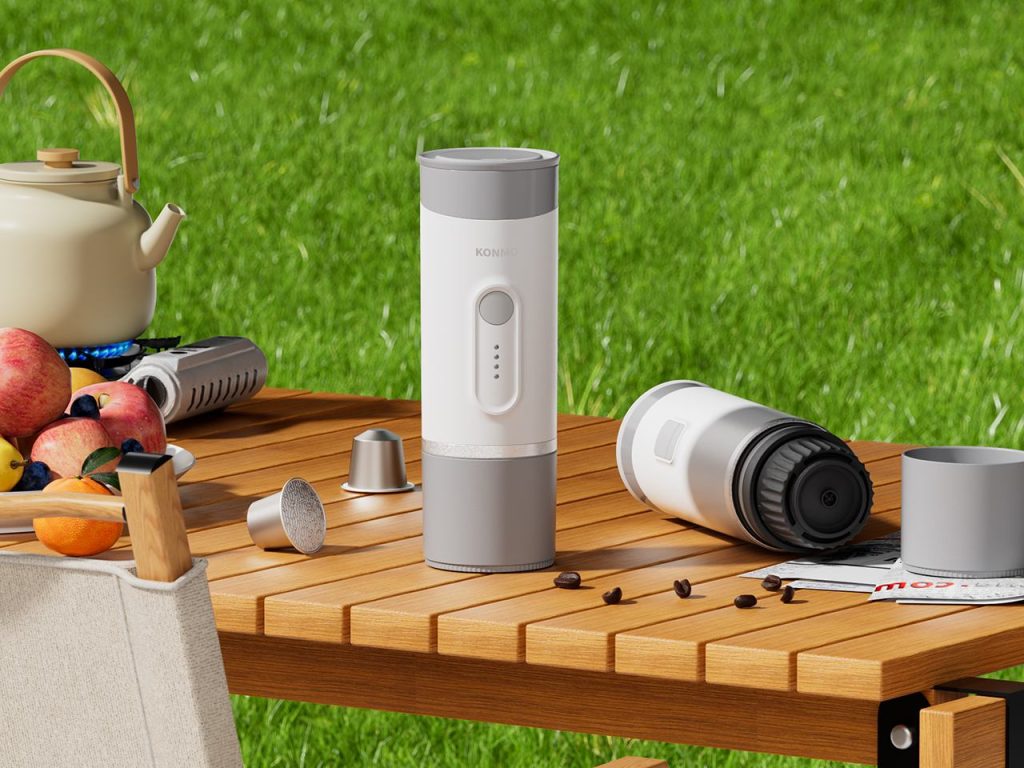
Like a café machine, portable models push hot water through finely ground coffee under pressure to extract flavors, oils, and the signature creamy crema. A tight seal in the brew chamber holds pressure stable during extraction.
Most models include 2-in-1 adapters: one for Nespresso-style capsules for zero-mess convenience, and one for loose ground coffee for custom bean choice. Pressure comes from either a hand-operated piston/lever or a built-in electric pump.
Common misconception: A 15 or 20 bar pump rating does not guarantee 9 bar of extraction pressure at the coffee puck. The peak pump number is a maximum tolerance, not a steady working pressure. Stable, consistent pressure near 9 bar is what produces balanced espresso with proper crema.
Is It Real Espresso or Just Strong Coffee?
It is real espresso — if the device hits two industry standards set by the Specialty Coffee Association:
- 9 bar (≈130 psi) of stable extraction pressure
- Water temperature between 92°C and 96°C (197–205°F)
Devices that fall short of these benchmarks produce bold, dark coffee, not true espresso.
Build quality also matters. Food-grade SUS 304 stainless steel and BPA-free PP components indicate a durable, travel-safe build that will hold up to repeated packing and use.
Manual vs. Battery-Powered Portable Espresso Makers
The two main categories trade effort for convenience. Neither is universally better — the right pick depends entirely on where and how you travel.
| Category | Manual Espresso Makers | Battery-Powered Espresso Makers |
|---|---|---|
| Power source | Hand force via piston/lever | Rechargeable battery + electric pump |
| Hot water | Required separately (stove/kettle) | Self-heating built in |
| Weight | 300–350g (ultra-light) | 650–750g |
| Consistency | Depends on user technique | Very consistent, one-button operation |
| Best for | Backpacking, camping, off-grid travel | Hotels, road trips, office, car travel |
| Biggest advantage | Never runs out of power; full pressure control | No extra gear needed; very easy to use |
| Biggest downside | Requires arm strength and practice | Limited shots per charge; higher price |
When to choose a manual model
Manual designs are the top pick for backpackers, campers, and off-grid travelers. With no battery to die, they work anywhere you can heat water. Premium lever models like the Flair GO include a pressure gauge for full extraction control, and they pack down small enough to slip into a backpack side pocket. They do require steady arm strength and some practice to get consistent results.
When to choose a battery-powered model
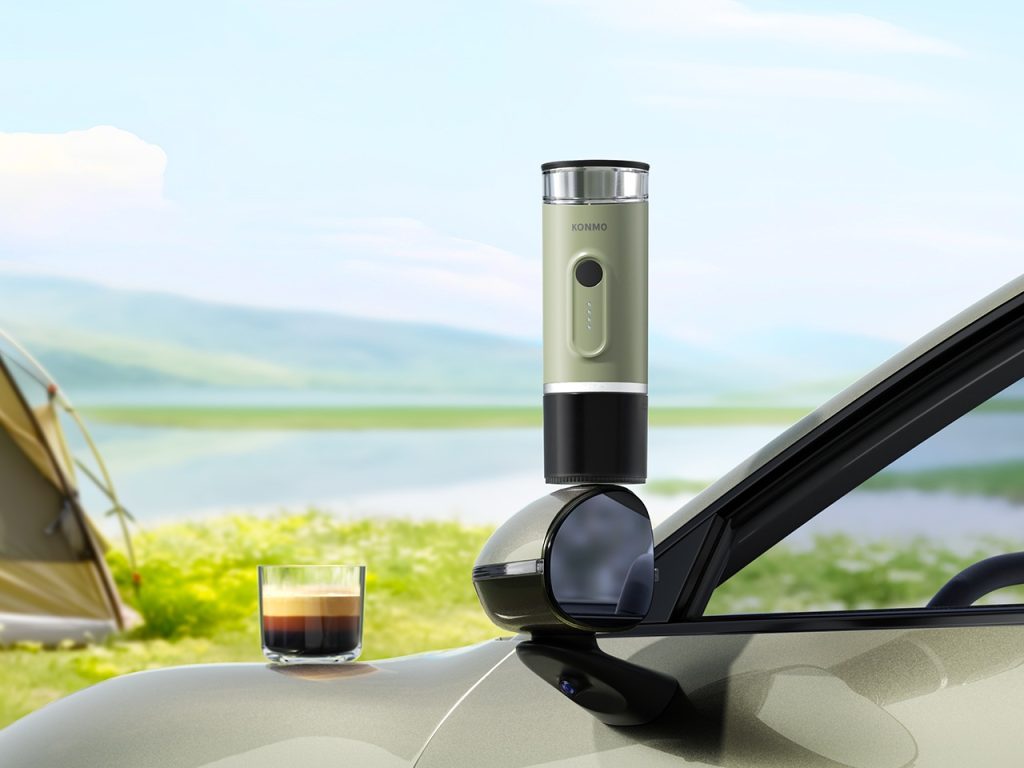
Self-heating battery models are ideal for hotel stays, road trips, and desk use. They heat their own water and brew with one button press. Popular options include:
- KONMO Explorer series: 7,500 mAh battery, USB-C rechargeable, ~3 hour charge time
- OutIn Nano: ~0.68 kg, fast heating, highly durable
- CONQUECO: Best for shots per charge (up to 4 per full charge)
All work with USB-C power banks, car chargers, or laptop ports. Note that most will not brew while actively charging.
Can You Take a Portable Espresso Maker Anywhere?
Airline travel
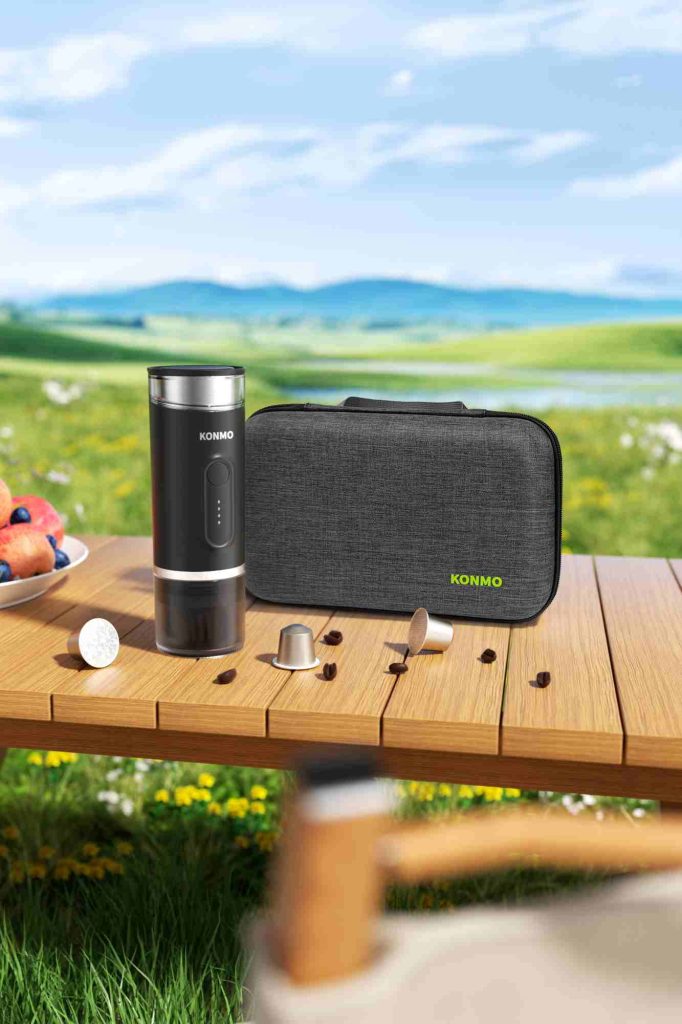
Nearly all portable coffee makers fit in carry-on or checked luggage. For battery-powered models, confirm current airline lithium battery rules before your trip — rules change occasionally, and most require batteries in carry-on bags. Manual models have no power restrictions at all.
Charging realities
Charging speed varies widely between models:
- CONQUECO (USB-C): ~3 hours from empty
- OutIn Nano (18W USB-C): can recharge twice from a small 18W phone power bank
- Essetto CM-01 Pro (standard USB-C): 6–7 hours recharge
Most battery models cannot brew while charging, so plan accordingly for multi-day trips.
Cleaning and upkeep
Capsule use leaves almost no mess. For ground coffee, simply empty the puck and rinse the brew chamber with water after use. Durable food-grade materials make this quick and easy, even in a hotel sink or at a campsite.
Ongoing cost
Capsules cost more per shot but save time and mess. Loose ground coffee is cheaper per cup and lets you use your favorite beans. For frequent travelers who buy café espresso daily, a portable machine usually pays for itself within a few months.
How to Choose the Right Model For Your Travel Style
Ask yourself these four questions to narrow down your options:
- Will you have access to power and hot water? If no, go manual. If yes, a battery model is more convenient.
- How much pack weight can you accept? Manual models are half the weight of battery ones.
- Do you prioritize convenience or control? Battery = easy and consistent; manual = fully adjustable for coffee enthusiasts.
- What is your total budget (upfront + ongoing)? Factor in capsule or bean costs over a full year of travel.
The best portable espresso machine is not the most powerful or the cheapest — it is the one that fits the trips you take most often.
FAQ
How hard is it to use a manual espresso maker?
Manual models require arm strength and a steady hand to build and maintain pressure. They take a few shots to master, but reward you with full control over extraction. They work best for travelers who already carry a way to heat water.
Can a portable espresso maker work without pre-heated water?
Only self-heating battery models can heat cold water on their own. Manual models require hot water from a kettle or stove.
How do you clean a portable espresso maker while traveling?
Capsule use leaves almost no residue. For ground coffee, empty the puck and rinse all coffee-contact parts with water. A quick rinse in a sink or at a campsite is enough to keep flavors clean between uses.
Which type is best for camping and backpacking?
Manual models are almost always better for camping and backpacking. They weigh very little, need no power, and work anywhere you can boil water. Battery models are a better fit for car camping and hotel stays.
Can I bring a portable espresso maker on a plane?
Most models fit easily in carry-on or checked luggage. Battery-powered units have lithium batteries that usually need to stay in carry-on bags. Always confirm current airline rules before you fly.