You have three main options for descaling an espresso machine: commercial descaling solutions, food-grade citric acid, and white vinegar. The best choice depends on your boiler material (aluminum vs. stainless steel) and your manufacturer’s official guidelines.
Commercial formulas are the safest overall pick for all machine types and protect your warranty. Citric acid is a reliable low-cost DIY option for stainless steel boilers. White vinegar is generally not recommended, as it risks permanent damage to internal components and leaves persistent off-flavors. This guide breaks down efficacy, material safety, costs, and step-by-step instructions to help you choose the right method for your machine.
Key Takeaways
- Commercial descaling solutions are the safest, most reliable choice for all machine types and keep your warranty valid.
- Food-grade citric acid is an effective, budget-friendly DIY option for stainless steel boilers.
- White vinegar is generally not recommended: it pits aluminum parts, degrades rubber seals, and leaves a persistent sour odor.
- Always check your coffee machine’s manual for approved products and procedures before descaling.
- Rinse thoroughly after every descaling cycle to remove all residual cleaning solution.
Your 3 Descaling Options: Side-by-Side Comparison

All three options dissolve mineral scale buildup inside boilers and water paths, but they differ widely in material safety, ease of use, and long-term impact on your machine.
| Factor | Commercial Descaler | Food-Grade Citric Acid | White Vinegar |
|---|---|---|---|
| Mineral removal efficacy | Highest; purpose-built for fast, thorough scale removal | Comparable to vinegar for most deposits | Works only on light, fresh scale buildup |
| Material compatibility | Formulas available for all metals (aluminum, stainless steel, brass) | Safe for stainless steel; not recommended for aluminum; caution on brass (>15 min contact) | Poor for all metals; highly corrosive to aluminum |
| Ease of use | Pre-measured tablets/powders; no measuring required | Requires measuring and mixing | Requires dilution; strong odor lingers |
| Cost | Higher upfront; lower long-term machine repair risk | Very low; low per-use cost | Lowest upfront; highest long-term risk |
| Best for | Warranty-covered machines, aluminum boilers, regular descaling | Stainless steel machines, budget home users | Only if explicitly approved by your manufacturer |
Popular commercial options include Urnex Dezcal tablets, Cafetto Restore (formulated for aluminum, brass, and stainless steel), and Biocaf cleaning powders.
Material Compatibility: The Most Important Decision
Your boiler material is the single biggest factor in choosing a safe descaling agent. Using the wrong product can cause permanent, irreversible damage.
Aluminum boilers
Aluminum is a highly reactive metal. Strong acids strip its protective oxide layer, causing permanent pitting, weakening, and eventual failure.
- Safe only: Aluminum-specific commercial descaling formulas with corrosion inhibitors.
- Avoid: Citric acid, white vinegar, and any generic acid-based cleaner. Even short exposures can cause damage over repeated cycles.
Stainless steel boilers
Stainless steel is far more acid-resistant. This is the most forgiving material for DIY descaling.
- Safe: Commercial descalers, food-grade citric acid, and (in a pinch) diluted vinegar for one-time use.
- Note: Citric acid is the most popular DIY pick for stainless steel, as it works as well as vinegar with no lingering smell.
Brass components
Brass parts (valves, fittings) carry one small caveat with citric acid: contact longer than ~15 minutes can cause copper redeposition, leaving a faint salmon-pink film. Stick to recommended soak times to avoid this.
How to Descale Your Espresso Machine (Step-by-Step)
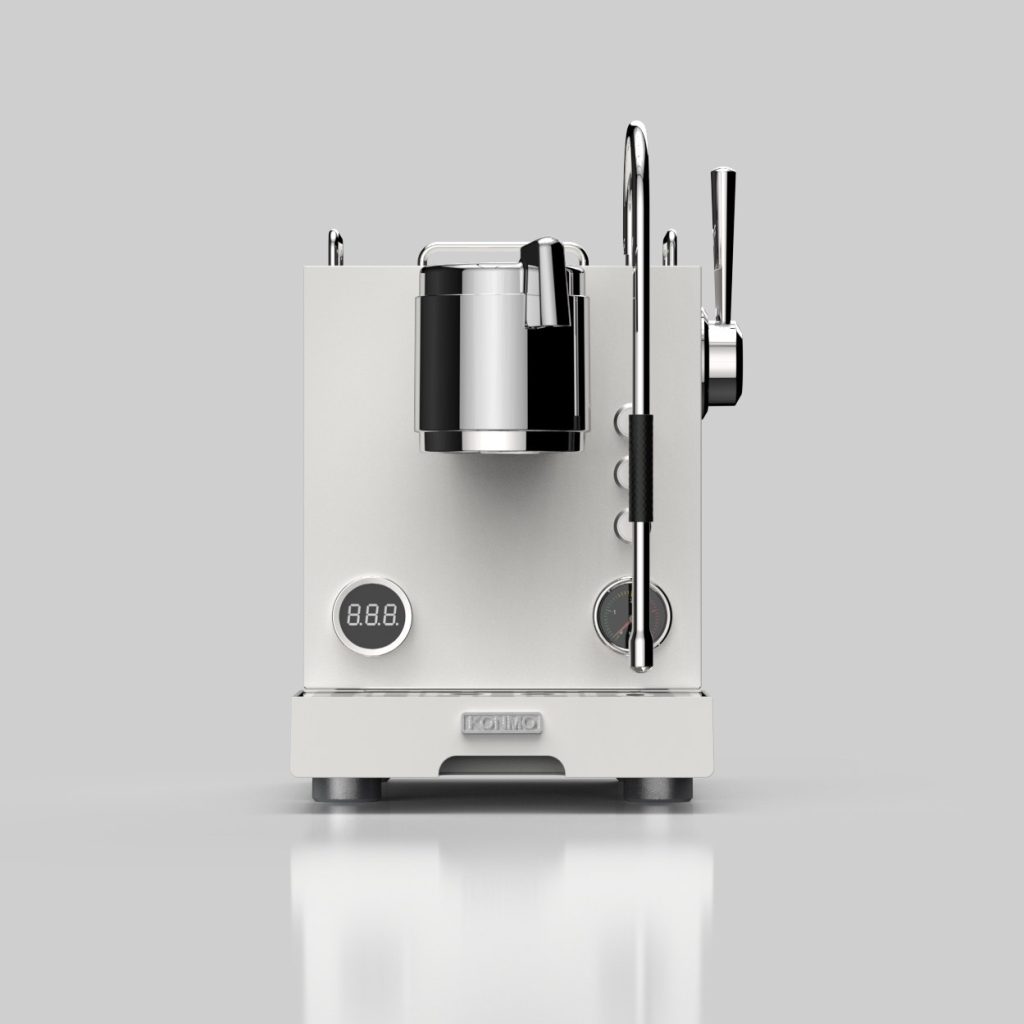
This method works for both commercial descalers and food-grade citric acid.
- Mix the solution: For routine cleaning, use 1–2 tablespoons of food-grade citric acid monohydrate per liter of warm water. For heavy scale buildup, use up to 14 tablespoons per liter. Follow package instructions for commercial products.
- Run half the solution through the group head and steam wand.
- Soak: Let the solution sit for the time recommended in your manual (typically 15–30 minutes). This gives the acid time to dissolve scale deposits.
- Flush the remaining solution fully through the system.
- Rinse thoroughly: Run 2–3 full reservoirs of fresh clean water through the machine until all sour or chemical taste is gone. Rinsing is just as important as the cleaning step to protect flavor and internal parts.
Note: Lemon juice is not a substitute. Its acid content varies widely, and pulp and sugars can leave behind residue that clogs internal lines and worsens buildup over time.
Why White Vinegar Is Usually a Bad Idea
White vinegar is a common home remedy, but it carries significant risks for espresso machines:
- Permanent aluminum damage: Acetic acid attacks aluminum far more aggressively than citric acid, causing irreversible pitting and thermoblock failure.
- Seal degradation: It breaks down rubber O-rings and gaskets over time, leading to leaks and costly repairs.
- Persistent odor: The sharp sour smell lingers for many cycles and can transfer to your coffee.
- Warranty void: Major manufacturers including Lavazza explicitly prohibit vinegar descaling. Using it will void your warranty and may cause permanent damage.
Only use vinegar if your manufacturer explicitly approves it — this is extremely rare.
Pro Tips for Safe, Effective Descaling
- Match frequency to your water hardness: hard water and daily use require more frequent descaling. Follow the schedule in your machine manual.
- If your machine is under warranty, always use a commercial descaler approved by your espresso machine manufacturer.
- Never descale an aluminum boiler with citric acid or vinegar unless explicitly approved.
- For stainless steel machines, food-grade citric acid delivers the best balance of cost, effectiveness, and safety.
FAQ
How often should I descale my espresso machine?
It depends on your water hardness and how often you use the machine. Hard water and daily use require more frequent descaling. Always follow the recommended schedule in your machine manual.
What is the correct citric acid ratio for descaling?
For routine cleaning, use 1–2 tablespoons of food-grade citric acid monohydrate per liter of warm water. For heavy, long-standing scale buildup, you can use up to 14 tablespoons per liter.
Does white vinegar work as a descaling solution?
It can dissolve light, fresh mineral deposits, but it is not recommended for most machines. It damages aluminum components and rubber seals, leaves a persistent odor, and is prohibited by many major manufacturers.
Why do I need to rinse the machine after descaling?
Rinsing removes all residual descaling solution from the boiler, valves, and water lines. This prevents chemical aftertaste in your coffee and protects internal parts from long-term residue damage.
Can lemon juice replace citric acid?
No. Lemon juice has inconsistent acid strength, and its pulp and sugar content can leave residue that clogs internal components. Food-grade citric acid is a far more reliable, clean option.