Yes, it is normal for coffee machines to produce steam — it is an intentional design feature for most espresso machines and models with steam wands. Steam serves two core purposes: supporting consistent espresso extraction, and powering milk frothing for lattes and cappuccinos.
Steam is only a problem if it leaks continuously, spits uncontrollably, or appears without corresponding coffee output. A few simple checks can distinguish normal operational steam from a fault requiring repair.
Key Takeaways
- Most coffee machines (especially espresso models) produce steam on purpose for brewing and milk frothing.
- Normal steam appears only during brew or frothing cycles and stops when the cycle ends.
- Leaking, sputtering, or excessive steam with little coffee output usually signals a blockage, seal failure, or scale buildup.
- Routine descaling and wand purging fix most common steam issues at home.
- Call a technician if steam pressure stays too high, drops suddenly, or problems persist after cleaning.
Steam Basics: Which Machines Produce Steam

All coffee machines release small amounts of vapor when heating water, but espresso machines and steam-wand models generate pressurized steam as a core function. Drip and pod machines only produce steam as a minor byproduct of heating.
Machine Type & Steam Capability Comparison
| Machine Type | Steam / Frothing Capability |
|---|---|
| Dual-boiler espresso machine | Separate boilers for brewing and steaming; instant, consistent steam pressure; best for frequent milk drinks |
| Heat-exchange (HX) boiler | Single large boiler with internal heat-exchange tube; near-simultaneous brew and steam; ideal for café-style workflow |
| Single-boiler machine | Requires mode switching between brew and steam; slower steam recovery; best for occasional milk drinks |
| Thermoblock system | Compact and affordable; slower steam recovery and greater temperature variance; for light/occasional use |
| Super-automatic machine | Automated frothing and brewing; performance depends on steam system engineering |
Normal Steam Pressure Ranges
Steam pressure is a deliberate, controlled part of coffee making. It does not impact espresso brew temperature, which stays near 200°F in well-designed machines.
| Machine Category | Typical Steam Pressure |
|---|---|
| Commercial HX machines | 1.0–1.2 bar |
| General industry range | 1.0–1.25 bar |
| Prosumer home machines | ~1.2 bar |
| Older dual-boiler models | 1.75–2 bar |
| Direct lever machines | 0.75–1.0 bar |
When Steam from Coffee Machines Is Normal
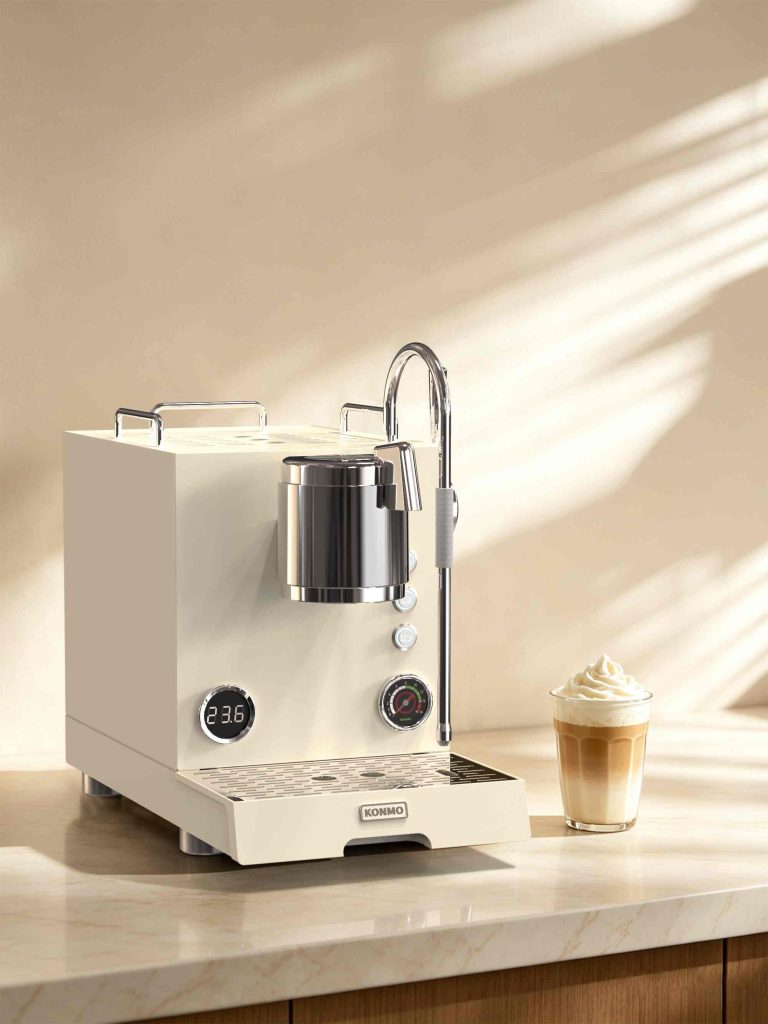
During Milk Frothing
Milk frothing is the most obvious intentional use of steam. Pressurized vapor is released through the steam wand into cold milk, heating the liquid while injecting tiny air bubbles to create smooth, glossy microfoam.
Froth quality depends on wand depth, angle, and steady pressure:
- Shallow wand placement creates larger, looser bubbles.
- Deeper placement produces tighter, more even microfoam.
- Angled insertion creates a gentle vortex for even heating.
Milk proteins break down around 140°F, so overheating causes burnt flavor and flat texture. Stop steaming when the pitcher feels warm to the touch and foam is smooth and shiny with no visible large bubbles.
Note: Steam boiler water has high mineral content and is not intended for drinking or brewing tea. Always use fresh water for the brew path.
During Brewing
Small amounts of steam during the brew cycle are unavoidable when water is heated to brewing temperature. A brief puff at the start or end of a shot is normal, as is small vapor release during heat-up cycles on automatic machines. Better machines minimize excess steam at the end of the cycle.
The key test for normal steam: it accompanies a full cup of coffee and stops when the cycle ends.
When Steam from Coffee Machines Signals a Problem
Abnormal steam behaves differently: it leaks from the sides of the machine, spits from the wand, or appears in large amounts while coffee output is slow or weak. These symptoms usually point to one of the common issues below.
| Steam Symptom | Likely Cause | Simple Home Fix |
|---|---|---|
| Weak steam output | Mineral scale buildup in boiler / tip | Descale the machine; clean the steam wand tip |
| Sputtering steam | Trapped air in the steam system | Purge the steam wand fully before use |
| High-pitched screaming noise | Pressure buildup from blockage | Allow the machine to cool down; check for clogs |
| Steam leaking from cap/lid | Worn, cracked, or misaligned silicone gasket | Inspect and replace the gasket; tighten the cap properly |
| Excessive steam with slow pour | Clogged filter, scale buildup, or improper lid seal | Descale; confirm filter basket and lid are correctly assembled |
When to Call a Professional
Contact a technician if:
- Steam pressure climbs too high and does not settle
- Steam pressure drops suddenly and stays weak after descaling and purging
- Sputtering or leaking persists after all basic fixes
- You see visible cracks, damaged seals, or water leaks around the boiler
FAQ
Does steam from an espresso machine affect shot taste?
No. Brewing and steaming run on separate systems in most well-designed machines, and espresso temperature stays near 200°F independent of steam pressure. You can pull a shot and froth milk without impacting coffee flavor.
How can you tell normal steam from a fault?
Timing and context are the clearest indicators. Normal steam appears during brew or frothing cycles and stops when they end. Warning signs include steam leaking from the machine sides, spitting from the wand, or excessive vapor with slow or weak coffee output.
Should a drip coffee maker ever steam?
Yes, briefly. Drip and pod machines release small amounts of vapor as a byproduct of heating water — a short puff at the end of brewing is normal. Heavy, continuous steaming with slow filling signals a problem, usually a clogged filter, improper seal, or scale buildup.
What causes weak or sputtering steam on a steam wand?
Trapped air and mineral scale buildup are the most common causes. Purging the wand usually fixes sputtering. Weak output often means a blocked tip or boiler scale, which descaling will usually resolve.
When should you call a professional for steam issues?
Call a technician if steam pressure stays too high, drops suddenly, or if problems persist after descaling, purging, and seal checks. Noisy pressure buildup, visible leaks, or consistent sputtering also warrant professional service.