The right espresso machine budget depends on your brewing frequency, skill level, and quality expectations. Beginners can start at $100–$500 for a reliable entry-level unit. Coffee enthusiasts seeking café-quality results should budget $500–$1,500 for better temperature stability and steam performance. High-volume households or professional users will need $1,500 or more.
Price alone does not equal value. Match your machine to your daily routine, not the highest price tag, and budget for a quality grinder alongside the machine itself.
Key Takeaways
- Entry-level machines ($100–$500) work well for beginners and occasional drinkers.
- Mid-range models ($500–$1,500) add PID temperature control and dual boilers for consistent café-quality results.
- The sweet spot for daily home use is $600–$1,200, balancing quality, durability, and usability.
- A quality burr grinder matters as much as the espresso machine itself — budget for both.
- Pay for features you will actually use; skip premium functions that don’t match your habits.
Espresso Machine Price Ranges

Under $500: Beginner & Entry Level
Best for new baristas, casual drinkers, and people still learning espresso technique.
- Core specs: Single boiler, basic temperature control; many models include PID tuning, pre-infusion, and 58mm portafilters.
- Pros: Low barrier to entry, compact footprint, simple operation.
- Limitations: No built-in grinder (add $150–$250 for a quality burr grinder); manual steam wands have a learning curve; temperature stability lags behind higher-end units.
- Note: Advertised “15-bar” pressure ratings are often marketing figures; real stable brew pressure around 9 bar is sufficient for quality shots.
$500–$1,500: Enthusiast & Home Café Quality
Best for daily drinkers and people who want café-consistent results at home.
- Core specs: PID temperature control (±1–2°F accuracy); dual boiler or dual thermoblock designs for simultaneous brewing and steaming; commercial-standard 58mm group heads with wide accessory compatibility.
- Pros: Stable extraction temperature, strong steam recovery, consistent shot-to-shot results; premium models hold 50–70% resale value.
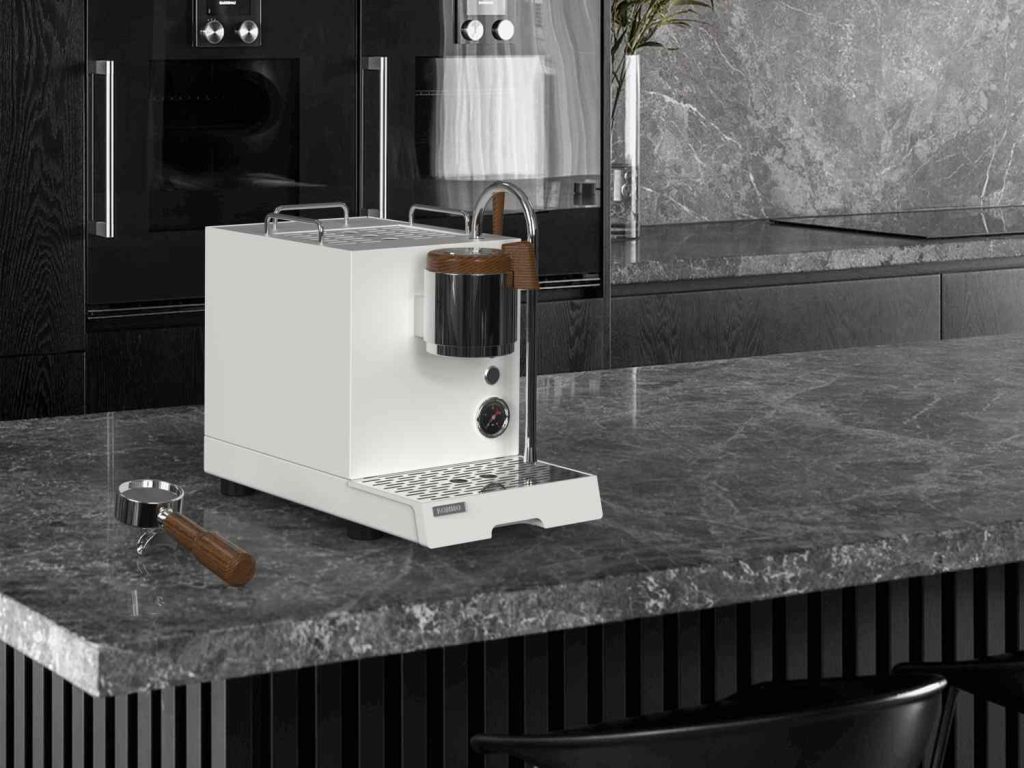
- Notable options: Lelit Victoria, Breville Dual Boiler, Ascaso Duo Plus, and KONMO semi-automatic lines with dual thermo blocks, stainless steel boilers, and independent pressure gauges.
$1,500+: Professional & High-Volume Use
Best for multi-person households, small offices, and serious enthusiasts.
- Core specs: Commercial-grade group heads, large capacity boilers, advanced temperature profiling, and reliable back-to-back shot performance.
- Pros: Built for frequent daily use, professional-level consistency, and long service life.
What Drives Espresso Machine Pricing?

Hardware features, not brand names, explain most price differences between models.
Automation Level
Automation is the single biggest price driver:
- Manual / semi-automatic: Lower upfront cost, but require manual grinding, tamping, and shot timing, with a steeper learning curve.
- Super-automatic / capsule: Easier one-touch operation, but higher price tags and less hands-on control.
Boiler Design
Boiler architecture defines performance and price tier:
| Feature | Heat Exchanger (HX) | Dual Boiler |
|---|---|---|
| Number of boilers | 1 | 2 |
| Simultaneous brew + steam | Yes | Yes |
| Temperature precision | Less precise | Higher (PID-controlled) |
| Warm-up time | Faster | Slower |
| Footprint | Smaller | Larger |
| Maintenance | Simpler | More involved |
| Relative cost | Lower | Higher |
Other Key Price Factors
- PID temperature control: Adds $200–$500 to the price tag, but delivers professional-level temperature consistency, reduces waste, and matters most for daily brewers.
- Grinder quality: A top-tier burr grinder often costs as much as a mid-range espresso machine. Without even particle size from a good grinder, even an expensive machine cannot produce café-level results.
- Steam system: High-quality steam wands and powerful boilers are worth the premium for regular milk drinkers, delivering faster, more consistent microfoam.
Budget Recommendations for Home Use
Daily Coffee Drinkers (2–4 drinks per day)
The best value sweet spot for most homes is $600–$1,200. This range delivers steady temperature, fast steam recovery, and reliable daily performance. Pair it with a capable burr grinder for a total café-quality setup of roughly $800–$1,100.
Occasional Drinkers (2–3 drinks per week)
If you only make espresso a few times a week, an entry-level model around $400 is sufficient. There is no need to overspend on features you will not use regularly; you can always upgrade later.
Pro Tip
Always budget for a grinder alongside your machine. Fresh beans and consistent grind size impact flavor more than any machine upgrade. Skimping on the grinder wastes the performance potential of a more expensive espresso machine.
FAQ
How much does a beginner need to spend on an espresso machine?
A beginner should plan for $100–$500. Solid entry machines start around $100; café-quality results with a grinder typically begin near $500 total.
What features raise an espresso machine’s price the most?
PID temperature control adds the most ($200–$500), followed by dual boiler / heat exchanger designs. A quality burr grinder often costs as much as a mid-range machine itself.
How much should a daily coffee drinker spend?
For 2–4 drinks per day, budget $600–$1,200 for the machine. A complete setup with a good grinder usually totals $800–$1,100 for consistent home café quality.
Is a $1,500 espresso machine worth it for home use?
It is worth it for enthusiasts who want café-level quality and drink 3+ servings per day. This price point delivers dual boilers, PID control, and commercial-grade group heads for reliable daily performance.
What matters more: the espresso machine or the grinder?
They matter equally. A quality burr grinder ensures even particle size for consistent extraction. Without one, even a costly machine cannot reach its full performance potential. Plan for roughly half your total budget to go to the grinder.