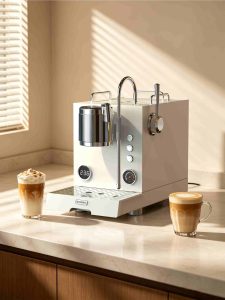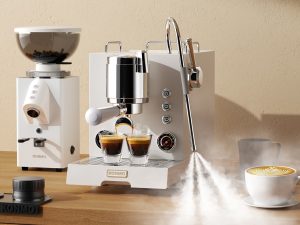
For daily home espresso drinkers in 2026, high-end espresso machines are often a worthwhile investment — but only when your usage frequency, budget, and willingness to maintain the machine align. The core tradeoff is high upfront cost against long-term value, consistent café-quality results, and extended durability. For people making 3+ shots per day, the reliable performance and 10–15 year lifespan typically deliver a strong return on investment. Occasional drinkers may not see enough benefit to justify the premium price tag.
Key Takeaways
- High-end espresso machines deliver the strongest return on investment for users making 3+ cups per day.
- Premium build materials (304 stainless steel, brass/copper internals) deliver 10–15 year lifespans, compared to 5–8 years for budget entry-level models.
- PID temperature control and 58mm professional group heads create far more consistent, repeatable extraction quality shot after shot.
- Dual boiler systems enable simultaneous brewing and steaming, making them ideal for daily latte and cappuccino drinkers.
- Always choose a machine that matches your real daily coffee habits, not idealized future goals.
What Makes a High-End Espresso Machine Different?
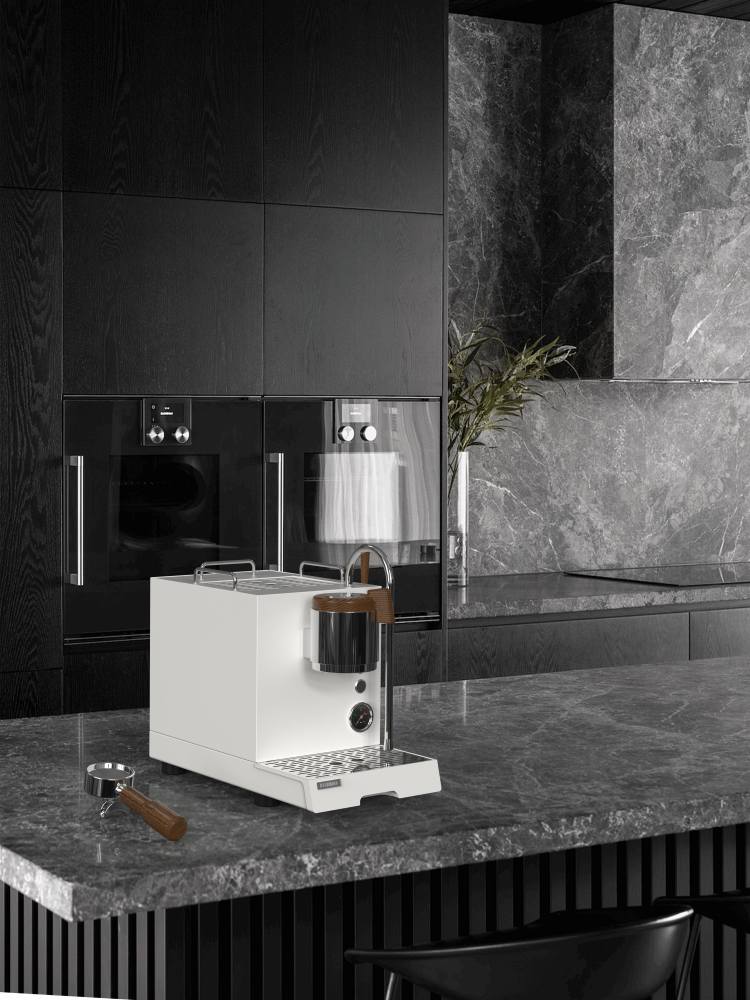
High-end models stand out from budget options in three core areas: build materials, construction precision, and temperature control. These differences directly impact daily flavor consistency and how many years the machine remains functional. Industry analysis from Methodical Coffee confirms that higher-end models consistently deliver better build quality and longer service life than budget alternatives.
Build Quality & Longevity
Cheaper espresso machines rely on plastic, aluminum, and low-grade stainless steel for internal and external components. High-end machines use food-grade 304 stainless steel for housings, and brass or copper for internal fluid paths and boiler components — materials that hold heat more evenly, resist corrosion, and stand up to years of daily cycling.
| Component | Budget Material | High-End Material |
|---|---|---|
| External housing | Plastics, brushed stainless steel, aluminum | 304 stainless steel |
| Internal components | Plastic and silicone | Brass and copper |
| Boiler | Aluminum | Stainless steel, copper, or brass |
| Portafilter size | Common 54mm | Standard 58mm |
This build quality gap translates directly to lifespan: entry-level semi-automatic models ($150–$500) typically last 5–8 years, while prosumer high-end machines ($1,200–$3,000+) regularly last 10–15 years or longer with proper maintenance.
Shot Quality & Consistency
Two core design features separate high-end extraction from budget performance: group head size and temperature stability.
A 58mm professional group head creates a more even pressure gradient across the coffee puck, leading to more uniform extraction. The larger basket holds more grounds for deeper flavor development, and the wider surface promotes even crema formation.
PID temperature control eliminates the guesswork from brewing. Traditional thermostat systems allow temperature swings of 10–20°F or more, while PID controllers maintain temperature within ±1°F or even ±0.5°F of the target. Since even a 2°F shift can noticeably alter extraction, this precision delivers consistent, repeatable shot quality, faster temperature recovery after each pull, and minimal overshoot. For home baristas, this level of control removes temperature as a variable, so you can focus on dialing in grind, dose, and yield.
Are High-End Espresso Machines Worth the Higher Price?
Upfront Cost vs. Long-Term Value
High-end machines start above $1,000, compared to $100–$400 for entry-level models and $400–$1,000 for mid-range options. To assess value, weigh repair costs and expected lifespan against the upfront price.
| Machine Type | Repair Cost Threshold | Recommendation |
|---|---|---|
| Entry-level ($100–$400) | Over $150–$200 justifies replacement | Most machines under $300 lack readily replaceable parts |
| Mid-range ($400–$1,000) | Up to $300–$400 still worth repairing | Depends on model build quality and durability |
| High-end ($1,000+) | $500–$700 still acceptable | Robust design with widely available replaceable parts |
A common rule of thumb: replace when repair costs exceed 50% of the price of a new equivalent machine. For example, a $400 brew unit service on a 3-year-old premium machine (roughly 15% of new cost) is almost always worth it, as it extends the machine’s life by another 5–7 years. For a 7-year-old machine needing a $650 overhaul vs. a $2,600 replacement, the repair is only 25% of the new cost — though future near-term repairs may make replacement the better long-term call.
Features That Actually Improve Daily Use
Dual boiler systems are the biggest quality-of-life upgrade for regular milk drinkers. Single boiler machines can only hold one temperature at a time, requiring waiting between brewing espresso and steaming milk. Dual boilers use two independent heating systems: one maintains precise brew temperature, while the other generates consistent steam for milk texturing.
| Benefit | Why it matters for milk drinks |
|---|---|
| Simultaneous brewing and steaming | Cuts down total drink preparation time |
| Independent temperature control | Lets you fine-tune extraction and steam separately |
| Consistent strong steam output | Creates smoother, more uniform milk texture |
| More stable brew temperature | Delivers more repeatable shot quality |
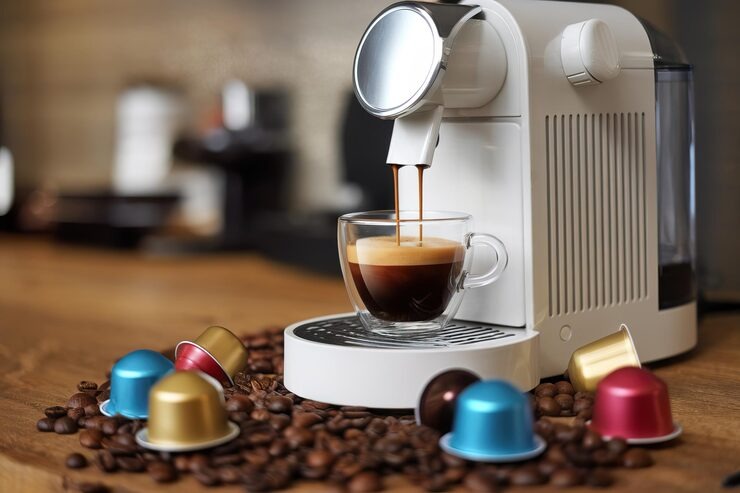
Compared to pod machines, high-end espresso machines deliver a far wider range of flavor possibilities for users willing to learn the craft. Pod systems offer perfect consistency with zero skill, but limited flavor profiles. High-end machines reward practice with customizable, café-quality results. Super-automatic espresso machines offer a middle ground, automating the process while using fresh whole beans.
Who Should Buy a High-End Espresso Machine?
Frequent Home Espresso Drinkers
How many drinks you make per day is the biggest factor in whether a high-end machine pays off. More frequent use spreads the upfront cost across more servings, shortening the payback period.
| Frequency of Use | Annual Café Cost Equivalent | Payback Period | Recommendation |
|---|---|---|---|
| Two espresso drinks daily | ~$3,650/year at café prices | Pays for itself in under a year | High-end machine is well worth it |
| Single daily drinker | Moderate annual spend | Within 1–2 years | Worth it; simpler mid-range models can also fit |
| Intermittent use (weekend only) | Much lower annual spend | Payback stretches over multiple years | Simpler $400–$700 machine works well |
For context: one latte per day puts the payback period at roughly 17 months; two drinks a day cuts it to around 10 months.
Two common mistakes undermine value:
- Overbuying: Purchasing a full dual-boiler system for a single person who rarely makes milk drinks adds unnecessary complexity and cost.
- Underbuying: Starting with an entry-level machine you outgrow within 6 months means paying twice, wasting money overall.
Enthusiasts Seeking Control & Customization
For home baristas who want full control over every extraction parameter, high-end machines deliver craft-level adjustability. Standout 2026 upgrades like the Ascaso Steel DUO PID offer adjustable OPV (6–9 bar brew pressure), dual PID temperature control for brew and steam, programmable volumetric dosing, pre-infusion, and shot timers, paired with a dual-thermoblock system for fast heat-up and stable temperatures.
Repairability and certification also add long-term value. Look for machines with CB, CE, RoHS, and 3C safety marks, and manufacturers with ISO 9001 and BSCI accreditation (such as KONMO) — these signal consistent manufacturing quality and responsible sourcing. Machines with readily available replaceable parts can be maintained for decades, rather than being discarded when a single component fails.
FAQ
Do high-end espresso machines require special coffee beans?
Not necessarily. High-end machines can work with a wide range of coffee beans, but freshly roasted beans generally make it easier to take advantage of their greater control over extraction. The machine does not require premium beans simply because it is a premium model.
Do high-end espresso machines take longer to learn?
They can have a steeper learning curve because they offer more controls and adjustments. Users may need to learn how grind size, dose, tamping, extraction time, and brewing parameters interact. Once these basics are familiar, the additional controls can make it easier to fine-tune the brewing process.
Do high-end espresso machines need a dedicated electrical circuit?
Not always. Many home models are designed to operate from a standard household outlet. However, machines with high-power heating systems may have greater electrical requirements, so always check the manufacturer’s voltage, wattage, plug, and circuit specifications before installation.