Keeping a pod coffee maker running well and brewing great coffee boils down to three core habits: daily rinsing, periodic deep cleaning, and regular descaling. Over time, coffee oils, mineral scale, and residual grounds build up inside the machine, leading to bitter flavor, slower brewing, inconsistent temperatures, and even premature component failure.
This guide covers exactly how often to clean your pod brewer, step-by-step methods for daily care and deep descaling, and how to choose safe cleaning agents. These steps work for most single-serve pod machines (including OEM/ODM models like KONMO), but always consult your owner’s manual first for model-specific guidance.
Key Takeaways
- Build-up of coffee oils and mineral limescale is the top cause of weak, bitter coffee and slow brew cycles.
- Rinse removable parts daily, deep clean weekly, and descale every 3–6 months (more often for hard water).
- Always check your manual before cleaning; some manufacturers warn against vinegar, which can damage seals and gaskets over time.
- White vinegar or citric acid work for descaling in most machines, but manufacturer-approved descalers are the safest choice.
- Using filtered water slows mineral buildup and extends the time between descaling cycles.
Why You Need to Clean Your Pod Coffee Maker
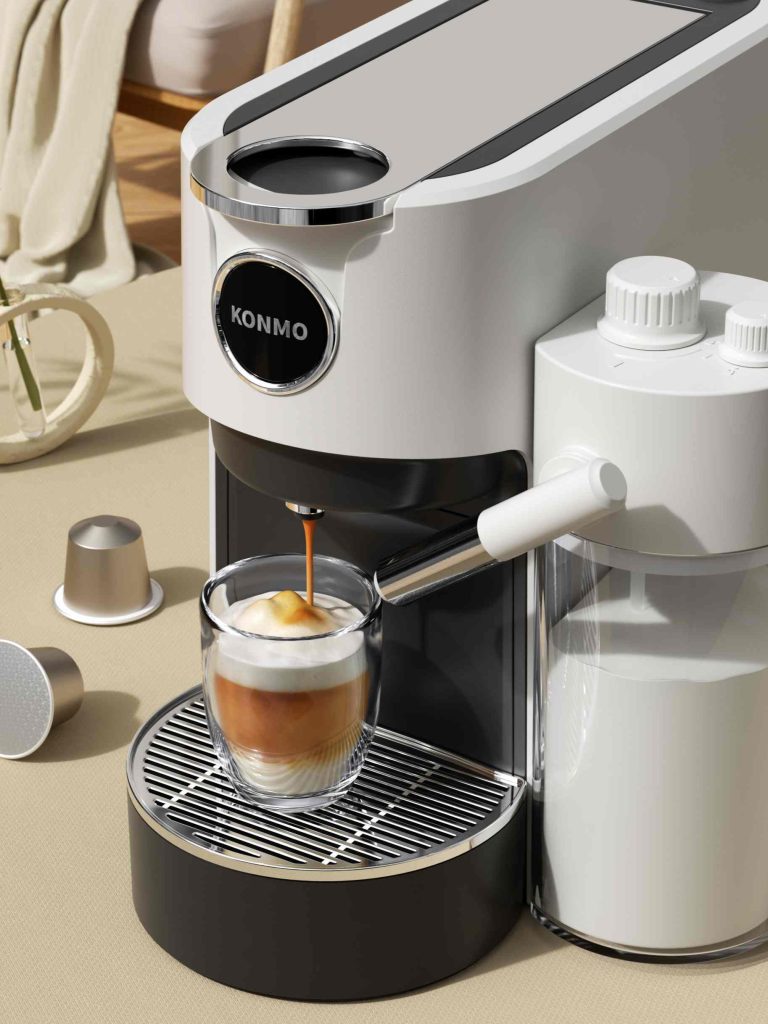
Single-serve pod machines brew quickly, but each cycle leaves behind thin layers of coffee oil, dissolved minerals, and fine grounds. Left unchecked, this buildup causes three main problems:
1. Degraded Coffee Flavor
Coffee oils and stale residue inside the brewing chamber and exit needle make coffee taste bitter, stale, or off. Old oils can also create rancid odors that transfer to fresh brews.
2. Mineral Scale Damage
Hard water carries dissolved calcium and magnesium ions. When heated, these form solid calcium carbonate (limescale) deposits that:
- Clog internal water lines and the brew needle
- Insulate heating elements, leading to lukewarm coffee and longer heat-up times
- Cause over-extraction that pulls harsh, bitter compounds from coffee grounds
- Wear down pumps and valves, shortening the machine’s overall lifespan
3. Bacteria & Mold Growth
The warm, moist environment inside the water reservoir, brewing chamber, and drip tray is ideal for bacterial growth (studies have found Enterococcus and Pseudomonas in poorly maintained machines). Drip trays in particular collect spilled liquid and can develop mold and odors after just a few weeks of neglect.
Recommended Cleaning Schedule
How often you clean depends on usage frequency and water hardness, but this routine works for most households:
| Frequency | Maintenance Task |
|---|---|
| Daily | Remove used pods immediately; rinse capsule holder and drip tray; wipe exterior |
| Weekly | Deep clean removable parts with soapy water; wipe out water reservoir |
| Monthly | Full deep clean with vinegar or approved cleaning solution |
| Every 3–6 months | Full descaling to remove mineral limescale |
You’ll know descaling is overdue if your machine brews slower than usual, makes louder pumping noises, takes longer to heat up, or produces consistently bitter coffee.
Step-by-Step Pod Coffee Maker Cleaning Guide

Daily Quick Clean (2 Minutes)
Prevent buildup before it starts with this simple post-brew routine:
- Eject the used pod immediately after brewing — trapped moisture and grounds create mold-friendly conditions.
- Rinse the capsule holder and drip tray under warm water to remove loose grounds and oil.
- Wipe the exterior and coffee outlet with a damp cloth.
- Empty the drip tray before it overflows.
Weekly Deep Clean (10 Minutes)
Once per week, do a more thorough pass:
- Unplug the machine and let it cool fully.
- Remove the drip tray, used pod container, and capsule holder. Wash all parts in warm, soapy water with a soft sponge, then air-dry completely.
- Scrub inside the brewing chamber (including the pyramid plate) with a soft brush dipped in soapy water, then wipe clean with a damp microfiber cloth.
- Empty and wipe out the water reservoir to prevent mineral film and biofilm.
- Clear the coffee outlet/puncture needle with a paper clip or small brush if clogged.
How to Descale a Pod Coffee Maker
Descaling removes hard mineral deposits from internal water lines and heating elements. Always check your manual first — some coffee machine manufacturers prohibit vinegar, which can degrade rubber seals and gaskets with repeated use.
Option 1: White Vinegar Method (Approved Machines Only)
- Mix equal parts white vinegar and fresh water, and fill the reservoir to the max line.
- Place a large container under the spout. Run a full brew cycle without a pod, then let the solution sit inside the machine for 30–60 minutes.
- Empty the reservoir and refill with plain fresh water.
- Run 4–6 full rinse cycles to remove all vinegar residue and taste. If the vinegar smell lingers, run additional cycles or wash the reservoir by hand.
Option 2: Citric Acid or Commercial Descaler
For machines where vinegar is not recommended:
- Citric acid mix: Stir 1 tablespoon of citric acid into 4 cups of water. Adjust volume for smaller machines.
- Commercial descaler: Follow the bottle’s instructions for dilution and cycle count. These formulated products use mild acids that break down scale without damaging delicate components.
For either option:
- Pour the solution into the empty reservoir.
- Run 1–2 brew cycles to circulate the solution, then let it soak for 4 hours (or as directed).
- Empty the reservoir and rinse thoroughly with soap and water.
- Run at least 2–3 full plain water rinse cycles to flush all remaining cleaner.
- Brew one cup of hot water only (no pod) as a final check to confirm no residue remains.
Pro Tips for Long-Term Machine Health
- Use filtered or bottled water to slow mineral buildup and extend time between descaling.
- Never use dish soap inside the water lines or brewing chamber — soap residue lingers and ruins coffee flavor. Only use mild soap on removable external parts.
- Replace water filters on the schedule recommended in your manual, if your machine uses them.
- Leave the lid open between uses to let the interior air out and prevent moisture buildup.
FAQ
Can you use dish soap to clean the inside of a pod coffee maker?
No. Dish soap leaves behind residue in water lines and the brewing chamber that alters coffee flavor. Only use mild soap on removable external parts. For internal cleaning, use plain water rinses or approved descaling solutions.
What if the coffee maker still smells like vinegar after rinsing?
Run additional plain water brew cycles. Most machines need 4–6 full rinse cycles to fully eliminate vinegar taste and odor. Hand-washing the reservoir with warm soapy water also helps remove lingering residue.
Does a pod coffee maker need a water filter?
Not all models include one, but if yours does, replace it on the manufacturer’s recommended schedule. Filtered water reduces mineral buildup inside the machine, slows scale formation, and improves coffee flavor over time.
Can you descale a pod coffee maker with lemon juice?
Lemon juice contains citric acid, which breaks down mineral scale, but always check your manual first. Some manufacturers approve citric acid mixtures; others recommend only commercial descaling solutions formulated for single-serve machines.
How do you know when descaling is overdue?
Slower brewing, louder pump operation, longer heat-up times, and consistently bitter coffee are common warning signs. These indicate mineral scale has built up enough to restrict water flow and insulate the heating element.