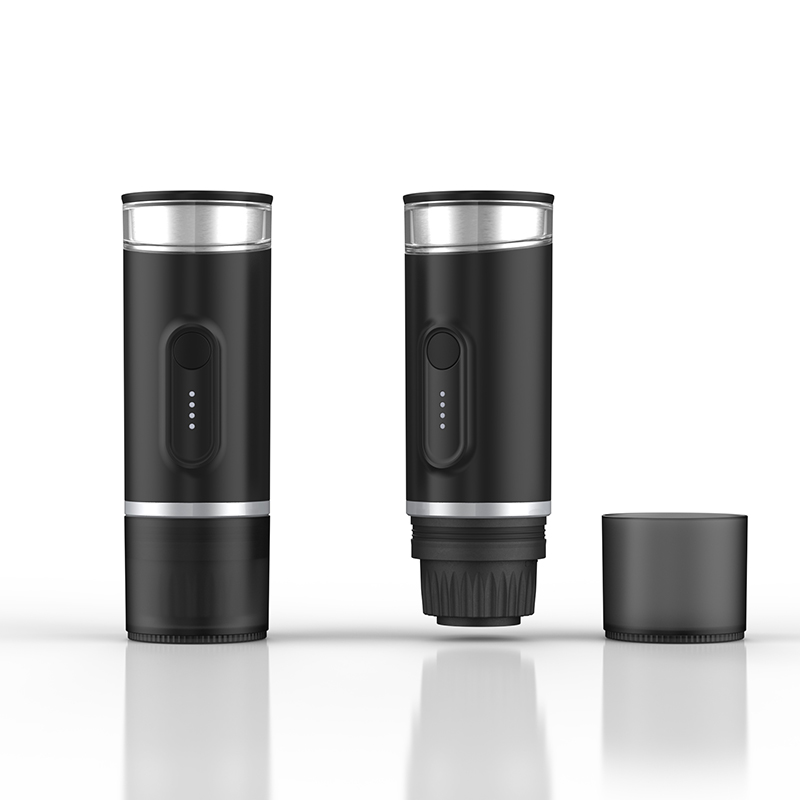
Whether you’re brewing at a campsite, on a mountain hike, or in a hotel room, a portable espresso machine lets you make espresso without a full-size coffee setup. It works by using pressure—generated by a hand pump, battery-powered pump, or compressed air—to force hot water through finely ground coffee, producing an espresso shot in a compact, travel-friendly device.
Key Takeaways
- Portable espresso machines use pressurized hot water forced through coffee grounds to brew authentic espresso with crema.
- They come in two main types: manual hand-pump models and battery-powered electric models.
- Optimal extraction requires 90–96°C water temperature and 9 bars of pressure for balanced flavor and rich crema.
- Battery-powered models brew 3–4 full shots per charge when heating cold water, and far more with pre-heated water.
- Compact, travel-ready designs let you brew fresh espresso anywhere, from remote campgrounds to city hotel rooms.
Portable Espresso Machine Working Principle: Water, Heat, and Pressure
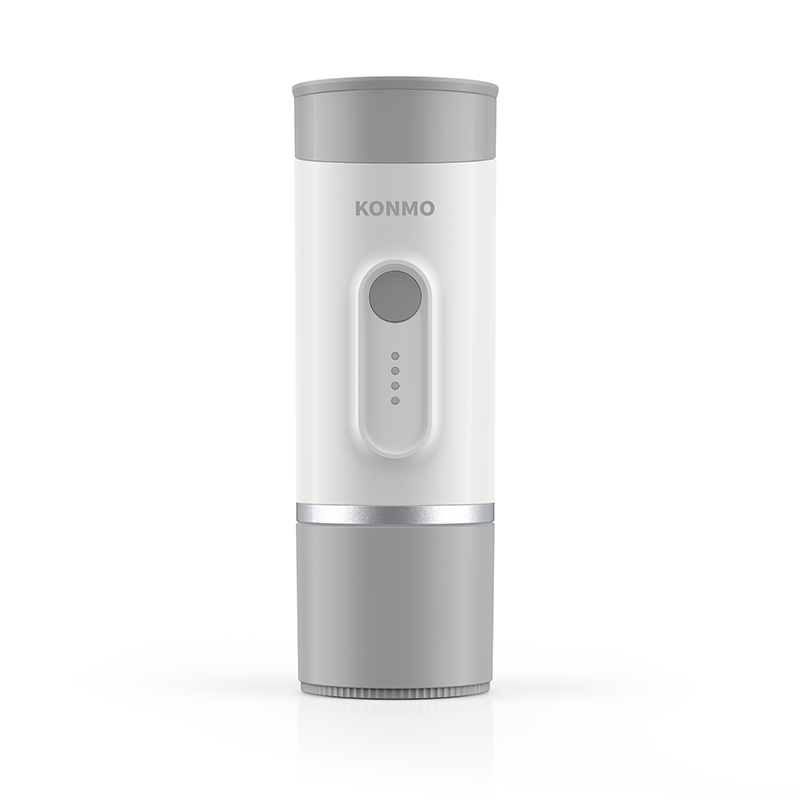
At its core, a portable espresso machine relies on three aligned elements: water, heat, and pressure. When calibrated correctly, they combine to extract a full-flavored shot with a creamy crema top, all in a device small enough to fit in a backpack or travel bag.
Optimal Temperature & Pressure Standards
Water temperature directly impacts extraction quality. The Specialty Coffee Association recommends a brewing range of 92–96°C (197–205°F) for high-quality espresso. Water too cool under-extracts grounds for sour, weak flavor; water too hot burns grounds for bitter, burnt notes.
Pressure is equally critical. The industry standard for espresso extraction is 9 bars, which balances flavor extraction and crema formation. Too little pressure produces fast, pale shots with high acidity; too much pressure slows flow and risks over-extraction and bitterness.
| Pressure Level | Extraction Flow | Flavor & Crema Result |
|---|---|---|
| 6 Bars | Fast flow, short extraction | Pale crema, light body, higher acidity |
| 9 Bars | Balanced flow, ideal extraction time | Rich crema, full body, balanced flavor |
| 12 Bars | Slow flow, high extraction resistance | Thick body, strong intensity, risk of bitterness |
Step-by-Step Brewing Process
- Heat water: Either pre-heat manually, or use the machine’s built-in battery-powered heater.
- Load coffee: Add 7–8g of finely ground coffee (or a compatible capsule) to the brew chamber and tamp evenly.
- Build pressure: Activate the hand pump or electric pump to reach brewing pressure.
- Extract: Pressurized hot water flows through the coffee puck, extracting flavors and producing crema as it exits the spout.
How Portable Espresso Machines Create Pressure
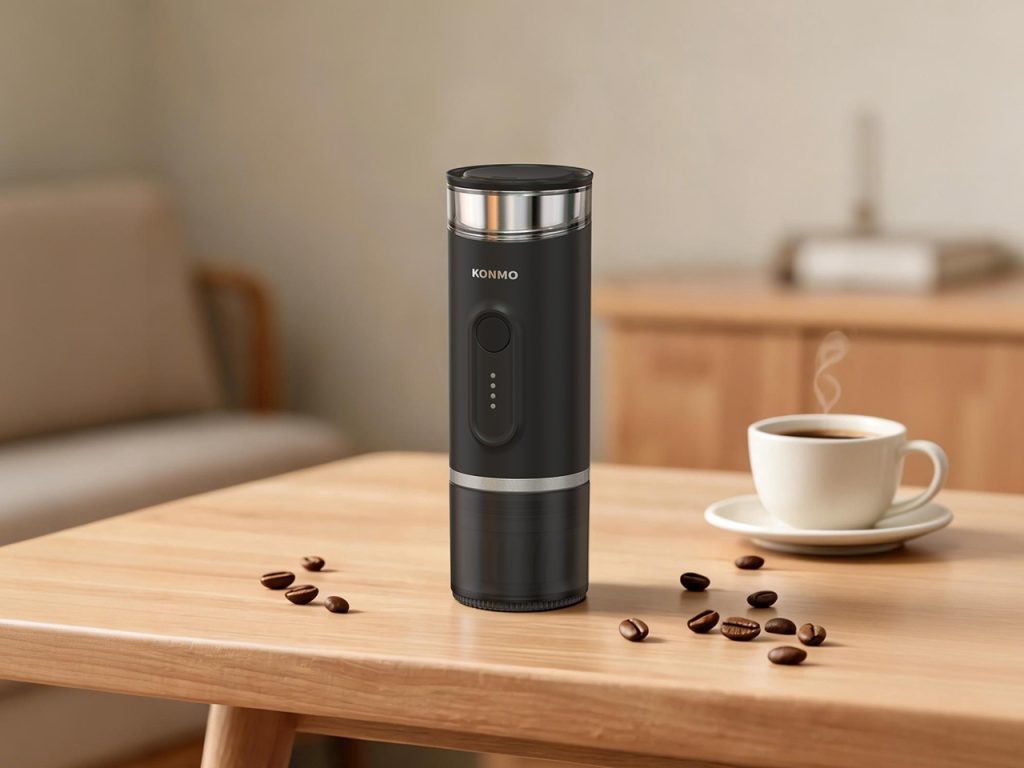
Pressure is the defining feature that sets espresso apart from drip coffee, and portable machines generate it in two primary ways.
Manual Hand-Pump & Lever Systems
Manual portable espresso makers use a hand-operated piston or lever to build pressure. The user pumps repeatedly to force hot water through the coffee grounds.
- Pros: No electricity required, simple design, lightweight, lower cost.
- Cons: Pressure fluctuates between pumps, leading to uneven extraction; requires physical effort (roughly 12.41 kJ per minute of energy use).
- Best for: Occasional use, ultralight travel, and off-grid locations with no power access.
Battery-Powered Electric Systems
Automatic portable espresso machines use a motorized pump to deliver steady, consistent pressure without manual effort.
- Performance: Delivers stable pressure throughout extraction for more reliable, repeatable shots. Energy use is roughly 9.02 kJ per minute — 38% less than manual systems.
- Battery life: A fully charged model can brew 3–4 shots when heating cold water from scratch. With pre-heated water, the same battery can produce 200+ shots.
- Charging: Most models support USB-C charging, compatible with power banks, laptops, car chargers, and wall adapters. For example, KONMO’s Explorer Series charges via 5V 3A USB, and works with 12V/24V car chargers and 10W+ USB power sources.
- Best for: Frequent travel, multiple shots per session, and users who want consistent results with minimal effort.
How Portable Espresso Machines Create Crema
Crema — the golden, frothy top layer of a good espresso — is a sign of proper extraction, created by pressure and coffee oils:
- Under 9 bars of pressure, hot water dissolves CO₂ trapped in roasted coffee grounds and blends with natural coffee oils.
- When the espresso exits the portafilter, pressure drops rapidly.
- Dissolved CO₂ forms tiny bubbles, which are stabilized by coffee oils, melanoidins, and proteins to create a lasting creamy foam.
A machine that maintains consistent temperature and 9-bar pressure will reliably produce real, long-lasting crema.
FAQ
Can You Use a Portable Espresso Machine Without Electricity?
Yes. Manual portable espresso machines can work without electricity as long as you have a way to heat the water separately. This makes them suitable for camping, hiking, road trips, and other locations without access to a power outlet.
Can You Use Cold Water in a Portable Espresso Machine?
Some portable models can heat cold water internally, while others require pre-heated water. Check the machine’s specifications before use, since heating capability, water volume, and heating time vary between models.
Can You Use Regular Ground Coffee in a Portable Espresso Machine?
Many portable espresso machines are designed for ground coffee, while some also accept capsules or pods. Check the brew chamber and basket specifications to determine the compatible coffee format and grind size.
How Long Does It Take to Make Espresso With a Portable Machine?
The total brewing time depends on whether the machine needs to heat the water, how much water it uses, and how the pressure is generated. Models that use pre-heated water can generally begin extraction sooner than machines that heat water internally.
How Much Espresso Can a Portable Machine Make at Once?
Capacity varies by model. Some portable machines are designed for a single shot, while larger models can prepare more coffee per brewing cycle. Water reservoir capacity and the size of the coffee basket are the main specifications to check.