Yes, you can travel with an espresso machine — both carry-on and checked baggage are allowed by the TSA. A smooth travel experience depends on three key factors: following airline and security rules, packing fragile components properly, and confirming power compatibility at your destination. With a small amount of planning, you can keep your daily espresso routine intact on the road.
Key Takeaways
- The TSA permits espresso machines in both carry-on and checked luggage with no special restrictions.
- Always drain all water and secure removable parts before packing to prevent damage and leaks.
- Use layered padding and a rigid case to protect fragile boilers, group heads, and portafilters from rough baggage handling.
- A plug adapter alone will not change voltage — use a wattage-matched voltage converter for international travel.
- Compact portable espresso makers are a simpler alternative for short trips and carry-on-only travel.
TSA & Airline Rules for Traveling With Espresso Machines
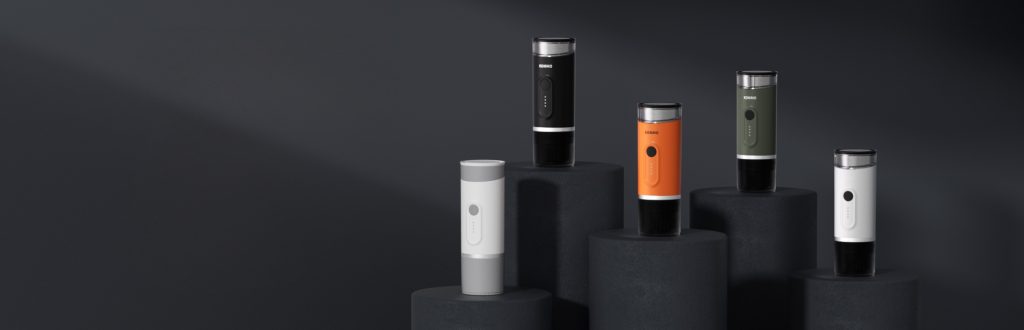
The TSA does not classify espresso machines as prohibited items. Security officers will X-ray the unit alongside your other belongings, and may ask you to remove it from your bag for separate screening. The main restrictions come from airline baggage policies, not security rules.
Carry-On vs. Checked Baggage
| Option | Pros | Cons | Best For |
|---|---|---|---|
| Carry-on | Full control over handling, no risk of rough baggage handling | Takes up personal item space, may need to be removed for screening | Compact machines, fragile high-end models |
| Checked | Frees up carry-on space, no hassle at security | Higher risk of impact damage, risk of lost luggage | Full-size countertop machines, longer trips |
Before you pack, confirm your airline’s specific carry-on size and weight limits, as these vary by carrier and fare class. Full-size espresso machines often exceed standard carry-on allowances, so checked baggage is usually the more practical option for countertop models.
For international trips, keep a copy of your purchase receipt in the case to answer customs questions about value and avoid unexpected duty fees.
How to Pack an Espresso Machine for Safe Travel
Proper packing prevents cracked housings, bent portafilters, and water damage during transit. Follow these steps for maximum protection:
1. Drain All Water First
Standing water is the top travel risk for espresso machines. It can leak into electronics, grow stale, or freeze in cold cargo holds.
- Empty the water reservoir completely.
- Run a short purge cycle to clear standing water from the boiler, group head, and internal lines.
- Leave the reservoir removed and the machine’s lid open to air dry fully before packing.
2. Secure Loose & Removable Parts
Rattling internal components cause scratches and damage during transit.
- Wrap the portafilter, tamper, drip tray, and cups separately in a padded pouch to keep them from scratching the machine body.
- Use a small strap or tape to hold the brew lever and control switches in place to prevent shifting.
- Loop the power cord loosely and secure it with a Velcro tie — never bend it sharply at tight angles.
3. Layer Protective Padding
The goal is to eliminate all movement inside the case or box.
- Wrap the entire machine in large bubble wrap, paying extra attention to protruding parts like the group head and steam wand.
- For checked luggage, place the wrapped machine inside a sturdy cardboard box, and fill all empty space with packing peanuts or perforated foam inserts to prevent shifting.
- Frequent travelers can invest in a hard-shell custom case for long-term reusable protection.
Pack the machine near the top of your bag to speed up security screening, since officers may ask to remove it for a separate X-ray pass.
Destination Power Compatibility for Espresso Machines
An espresso machine that works perfectly at home can fail or be permanently damaged if plugged into an incompatible foreign power supply. There are two key factors to confirm:
Plug Type
A plug adapter changes the shape of the prongs to fit local wall outlets. It does not change the electrical voltage.
Voltage
Most North American espresso machines run on 120V, while most of Europe, Asia, and Oceania use 220–240V power. Plugging a 120V machine directly into a 240V outlet will destroy its heating element and internal electronics.
To fix this, use a voltage converter (transformer) rated for at least your machine’s full wattage. Always match the converter’s watt rating to your espresso machine’s peak power draw, not just its average operating power.
Portable Espresso Makers: A Travel-Friendly Alternative
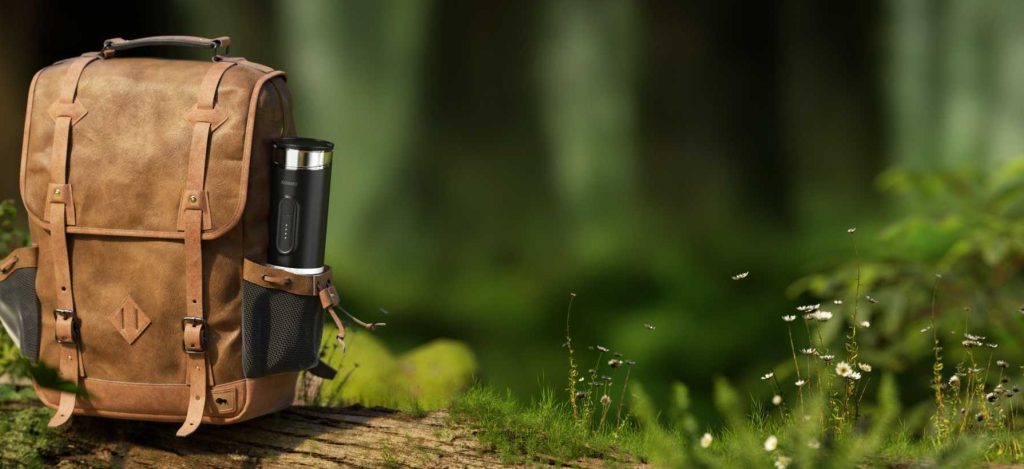
For short trips, carry-on-only travel, or camping, a portable espresso maker is often a simpler alternative to packing a full countertop machine. These compact devices brew genuine espresso without the bulk and weight of a home unit.
Common Portable Espresso Types
| Design | Power Source | Effort Level | Best Use Case |
|---|---|---|---|
| Manual lever | Hand pressure | High | Travelers who want full control over extraction |
| Handheld pump | Hand pressure | Moderate | Hiking, camping, and lightweight backpacking |
| Battery-powered | Rechargeable battery | Low | Hotel stays, road trips, and low-effort travel |
Key Features to Consider
- Water heating: Some units accept preheated water from a kettle or thermos; others have a built-in heating element.
- Cleanup: Look for designs that disassemble easily for quick rinsing on the go.
- Size: Most models fit inside a daypack, but dimensions vary widely between lever and battery-powered designs.
All camping coffee machines still need the same basic packing care: empty all water before travel, lock moving parts, and use a padded pouch to prevent scratches from other items in your bag.
FAQ
Does the TSA allow espresso machines in carry-on bags?
Yes. Espresso machines are permitted in both carry-on and checked luggage. Security officers may ask you to remove the unit for separate X-ray screening, so packing it near the top of your bag speeds up the process.
Will my home espresso machine work in another country?
Not automatically. Most countries use different voltage standards than North America. A plug adapter only changes the prong shape — you will also need a wattage-matched voltage converter to avoid damaging the machine’s electronics.
How do I pack a portable espresso maker for travel?
Use a padded pouch to protect it from scratches by other items in your bag. Empty all water from the unit before packing, and lock any moving levers or switches to prevent damage in transit.
Are portable espresso makers worth it for short trips?
Yes. They fit easily in a daypack, require no countertop space, and brew genuine espresso without the bulk of a full machine. Manual models need no power at all, making them ideal for camping and off-grid travel.