Yes, there are many coffee machines that brew without pods. The most common pod-free options include drip coffee makers, espresso machines, French presses, pour-over brewers, and Moka pots. These methods use loose ground coffee instead of single-use capsules, cutting ongoing costs, reducing plastic waste, and giving you full control over flavor and bean choice.
Pod-free brewers come in formats for every routine: single-serve models for daily solo drinkers, carafe-style machines for families, and manual designs for camping and off-grid use. This guide breaks down every major pod-free option, how they work, and how to pick the right one for your habits.
Key Takeaways
- Drip brewers, espresso machines, French presses, pour-over cones, and Moka pots all make coffee without pods.
- Pod-free brewing costs less long-term: ground coffee is far cheaper per cup than disposable capsules.
- Choose a machine based on your daily routine: convenience, drink preferences, and available counter space.
- Manual brewers like French press and Moka pot work entirely without electricity, ideal for travel and camping.
- Brewing without capsules eliminates single-use plastic waste and lets you use any fresh beans you prefer.
1. Drip Coffee Makers (No Pods)
Drip brewing is the most popular pod-free method for daily home use. An automatic machine slowly drips hot water over ground coffee held in a paper filter, and brewed coffee collects in a carafe below.
How it works
Water is heated and evenly distributed over the coffee bed. The filter traps used grounds, and clean brewed coffee flows into the pot. The Specialty Coffee Association recommends a brew temperature of 92–96°C and a total brew time of 4–6 minutes for optimal flavor. Use a medium grind (sand texture) for best results, with a standard ratio of 6g of coffee per 100ml of water.
Popular Pod-Free Drip Formats
- Carafe-style drip makers: Brew 8–12 cups at once, ideal for families and offices. Low ongoing cost, with cheap paper filters and occasional descaling as the only upkeep.
- Pod-free single-serve drip makers: Brew one cup at a time with loose grounds, for the convenience of single-serve without capsule costs. For example, the Technivorm Moccamaster Cup One brews a 10oz cup in 4 minutes, with precise temperature control and auto-shutoff.
- Grind-and-brew models: Built-in burr grinders automatically dose and grind beans for each cup, for maximum freshness with minimal effort.
2. Espresso Machines (No Pods)
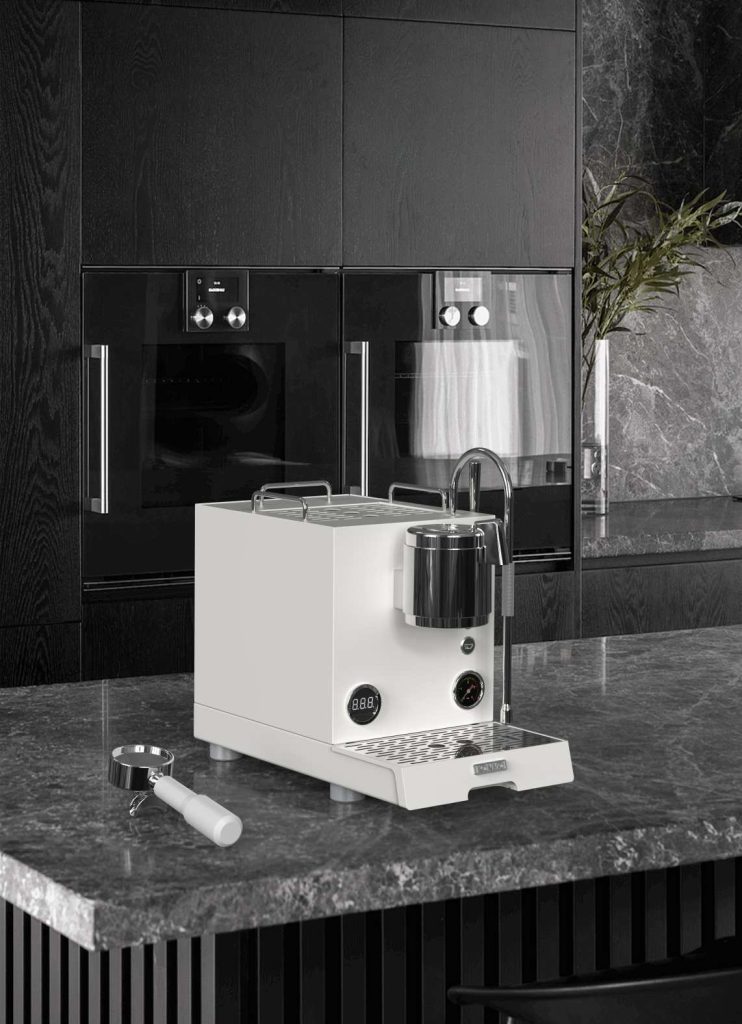
Traditional espresso machines use loose ground coffee instead of capsules. You fill a portafilter basket with finely ground coffee, tamp evenly, lock it into the group head, and the machine pushes pressurized hot water through the puck to extract concentrated espresso.
Core Advantages
- Full control over dose, grind size, and extraction time for café-quality results
- Compatible with any bean or roast, no brand lock-in
- Can make all milk-based drinks (latte, cappuccino, macchiato) when paired with a steam wand
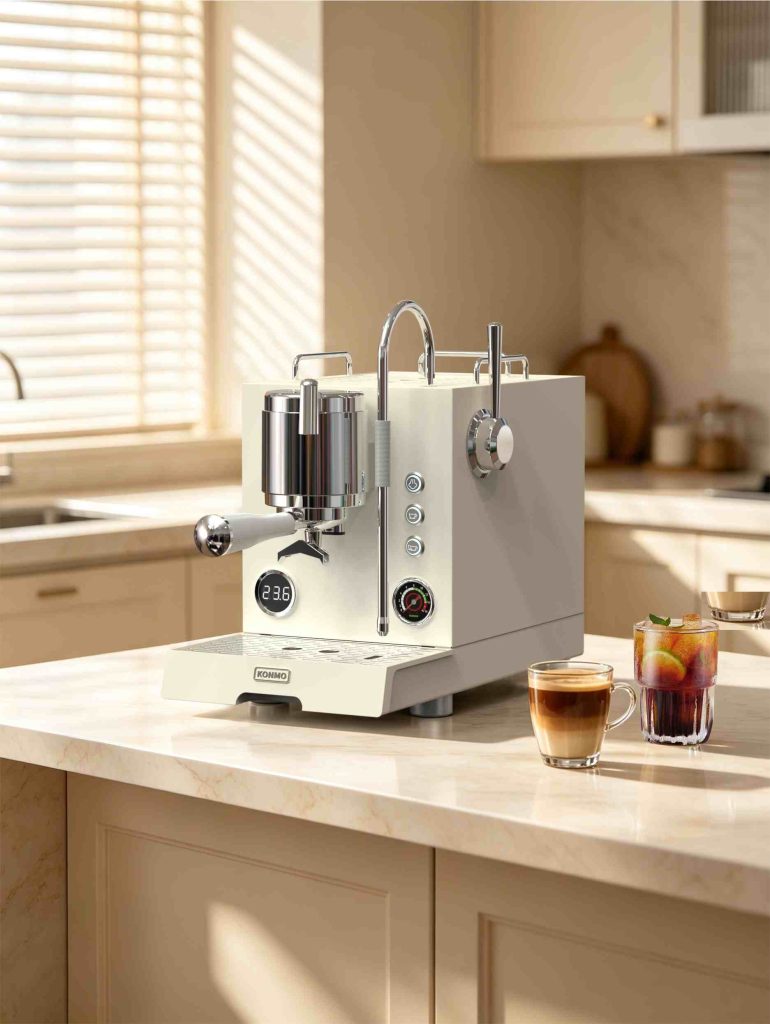
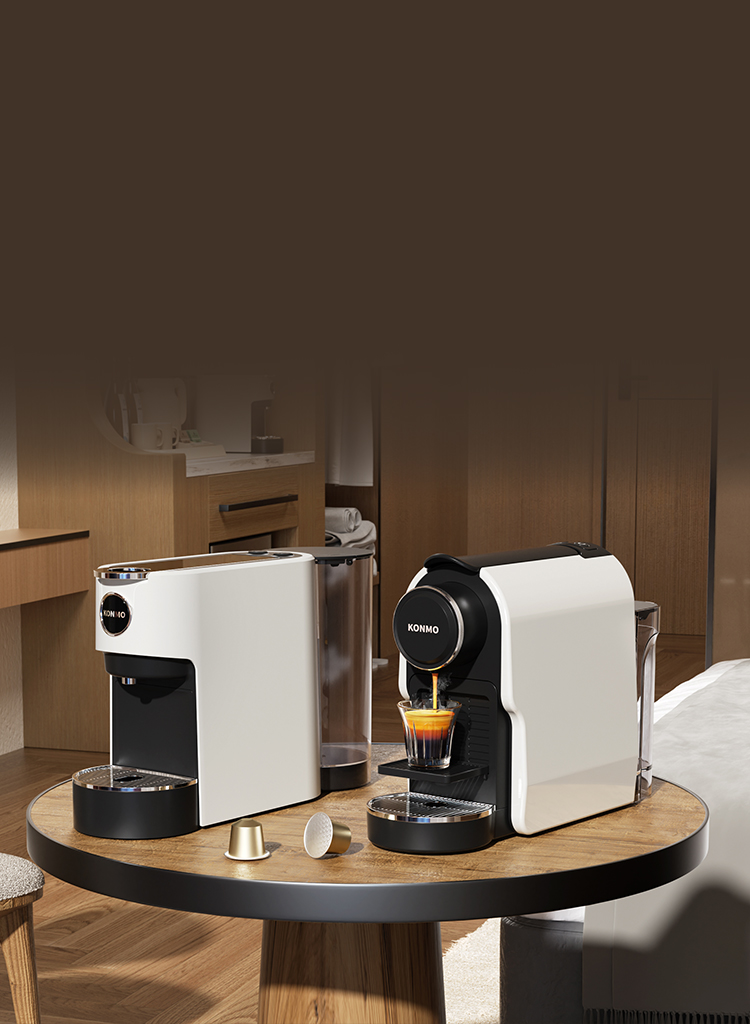
Product Example: KONMO Pod-Free Espresso Machines
KONMO’s semi-automatic espresso machines deliver professional pod-free performance for home and small commercial use:
- KM-S100 / KM-S550: Dual thermoblock design with PID control, 58mm commercial group head, and dual electromagnetic pumps (9–12 bar pressure)
- KM-S550 Master Edition: Adds a 2L stainless steel steam boiler and custom 1.8L saturated group head for consistent shot quality
Upkeep is straightforward: daily rinsing of the portafilter, regular backflushing, and periodic descaling. Over time, loose grounds cost significantly less per shot than capsules.
3. Manual Coffee Brewers (No Pods, No Electricity)
Manual brewing methods use only loose grounds and simple tools, with no pods and often no electricity required.
French Press
Ground coffee steeps in hot water for several minutes, then a fine mesh plunger presses the grounds to the bottom of the carafe. It produces a rich, full-bodied cup with low upfront cost and no disposable filters needed.
Pour-Over
A cone holds a paper filter and coffee grounds; you pour hot water slowly in circles over the bed. It produces a clean, bright cup with high clarity, and is highly portable. Automatic single-serve pour-over machines (like the Coulee Swirl) also exist for one-cup pod-free brewing with less manual effort.
Moka Pot (Stovetop Espresso)
A stovetop brewer that pushes heated water from a lower chamber up through a coffee basket into the top collection chamber. It makes strong, espresso-style coffee using only a stovetop heat source.
All three manual methods work without grid electricity — you only need a way to heat water. This makes them ideal for camping, travel, and small kitchens.
How to Choose the Right Pod-Free Coffee Maker
Side-by-Side Comparison
| Machine Type | Brew Style | Upfront Cost | Maintenance | Best For |
|---|---|---|---|---|
| Drip coffee maker | Automatic filter brew | Low to mid | Paper filters + descaling | Families, daily drinkers, convenience |
| Espresso machine | Pressurized shot | Mid to high | Rinsing + backflushing + descaling | Milk drink lovers, coffee enthusiasts |
| French press | Full immersion | Very low | Rinse after use | Budget buyers, travel, full-bodied coffee |
| Pour-over | Manual filter | Very low | Filters + quick rinse | Hands-on brewing, clean flavor |
| Moka pot | Stovetop pressure | Very low | Rinse + occasional gasket replacement | Strong coffee, no-electricity use |
Cost Savings vs. Pod Machines
Switching from disposable pods to ground coffee saves hundreds of dollars per year:
- Disposable pods: ~$300–$600 per year for daily drinkers
- Ground coffee + pod-free machine: ~$120–$250 per year
- Annual savings typically exceed $200, with better flavor and no plastic waste
Match the Machine to Your Routine
- Busy mornings, convenience first: Automatic drip maker with built-in grinder
- Espresso/milk drinks: Semi-automatic espresso machine with steam wand
- Tight budget: French press or Moka pot
- Camping/travel: Manual brewer (no electricity needed)
- Small space, single drinker: Pod-free single-serve drip or compact espresso model
FAQ
Are pod-free coffee machines cheaper to run than capsule machines?
Yes, over time. Disposable pods cost roughly $300–$600 per year for a daily drinker, while ground coffee costs about $120–$250 annually. That adds up to over $200 in savings per year, with no ongoing capsule markup.
Is there such a thing as a single-serve coffee maker without pods?
Yes. There are many single-serve drip and espresso machines that brew one cup at a time using loose ground coffee, no capsules required. Some models also include built-in grinders for maximum freshness.
Which pod-free coffee methods work without electricity?
French press and Moka pot both work entirely without grid power — you only need a way to heat water. Pour-over also needs only a kettle. All three are popular for camping, travel, and off-grid use.
How much maintenance do pod-free coffee machines need?
It varies by type:
- Drip machines: Paper filter replacement + periodic descaling
- Espresso machines: Daily portafilter rinse, regular backflushing, and descaling
- Manual brewers: Simple rinse after each use, with occasional deep cleaning
What is the most important thing to check before buying?
Match the brewer to your daily routine, not just features. If you value speed, pick an automatic drip model. If you want lattes and cappuccinos, choose an espresso machine with a steam wand. If counter space is tight, opt for a compact manual or single-serve model.